
Destiny Carter Is Making Electronic Music’s Black Queer Roots Heard
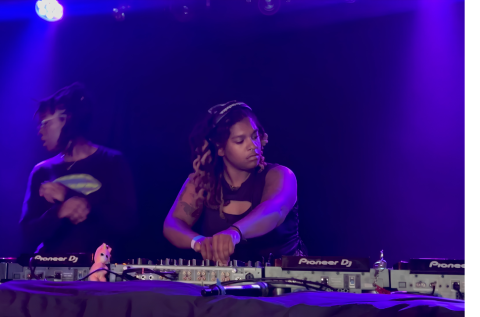
Destiny Carter MM '20 performing at Detroit’s Movement Music Festival
Image courtesy of Destiny Carter
When Destiny Carter MM ’20 performed with Black Queer Power Hour at Detroit’s Movement Music Festival last May, she took the collective’s celebration of Black and queer electronic music to one of the genre’s most respected festivals.
Carter, an alumna of the Master of Music in Music Production, Technology, and Innovation program, is part of Black Queer Power Hour, a grassroots art, music, and culture collective that centers Black and queer liberation through electronic dance music, club culture, and educational programming. The Movement appearance was the culmination of years spent building connections in the electronic music community.
Held annually in Detroit, the birthplace of techno, Movement is one of the world's most respected electronic music festivals. Carter's appearance came during Further x Homeless Homies x Paxahau, an event hosted by renowned Detroit DJ and producer DJ Bone that combines electronic music with fundraising efforts supporting housing initiatives and social services for people experiencing homelessness.
Community support has been key to opportunities like Movement. "We're independent DJs and artists. We don't have booking agents or managers," Carter said. "A lot of our opportunities come through word of mouth and community members who see and understand our vision. We've been steadily building this network for almost four years."
Black Queer Power Hour was founded to celebrate the Black and queer pioneers who helped shape electronic music while creating opportunities for today's artists. "We wouldn't have electronic music without Black queer artists and DJs, but we don't see that reflected in mainstream scenes today," Carter said. "Black Queer Power Hour tells that history and creates a future where DJs and artists like us have a platform to shine."
The connection between music and community action also resonated with Carter. Inspired by DJ Bone's work through Homeless Homies, she sees club culture as a powerful vehicle for community care and social impact.
Looking back on her time at Berklee Valencia, Carter credits the program with giving her both the technical and personal foundation for her career. DJ classes helped launch her professional path, while production courses gave her the skills to create and perform her own music. Just as important, she says, were the relationships she built along the way.
Her advice for current Berklee students is simple: Invest in your community. "Build connections with your professors and classmates," Carter said. "Use this time and these resources to the best of your ability. Don't rush or take this time for granted and stay true to yourself and your art. Talent is a beautiful thing, but so is integrity and self-assurance."